
Mouse Secondary Antibodies

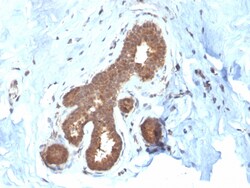
Biotium Glutathione S-Transferase Mu2 (GSTM2)(CPTC-GSTMu2-2), 1mg/mL
Recognizes Glutathione S-Transferase of the mu class, which is involved in the detoxification of toxins, drugs, and products of oxidative stress by conjugation with glutathione. Primary antibodies are available purified, or with a selection of fluorescent CF Dyes and other labels. CF Dyes offer exceptional brightness and photostability. Note: Conjugates of blue fluorescent dyes like CF405S and CF405M are not recommended for detecting low abundance targets, because blue dyes have lower fluorescence and can give higher non-specific background than other dye colors.

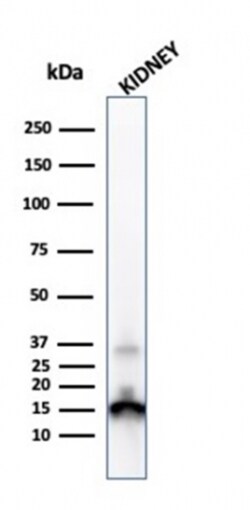
Biotium Transthyretin (Prealbumin)(CPTC-TTR-1), 1mg/mL
Prealbumin, also designated transthyretin, is a major thyroid-hormone binding protein involved in transporting thyroxine from the bloodstream to the brain. Prealbumin is located in the cytoplasm and in the vesicles of developing rat brain cells, and is thought to be transported there from the cerebrospinal fluid via endocytosis. Sequence variants of this protein have been identified in amyloid fibrils from patients with familial amyloidotic polyneuropathy (FAP), the most common form of hereditary systemic amyloidosis. Although the biologically active form of Prealbumin is a tetramer, the amyloidogenic intermediate is thought to be a monomeric species. Prealbumin also binds to the retinol carrier protein RBP (retinol-binding protein). Primary antibodies are available purified, or with a selection of fluorescent CF Dyes and other labels. CF Dyes offer exceptional brightness and photostability. Note: Conjugates of blue fluorescent dyes like CF405S and CF405M are not recommended
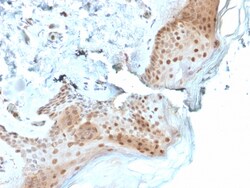
Biotium 8-Oxoguanine DNA Glycosylase(CPTC-OGG1-1), 1mg/mL
8-Oxoguanine DNA Glycosylase (OGG1), otherwise known as N-Glycosylase/DNA lyase, is the enzyme responsible for the excision of 8-oxoguanine (8-oxoG), a mutagenic base by-product which occurs as a result of exposure to reactive oxygen. The action of this enzyme includes lyase activity for chain cleavage. Accumulation of 8-oxoG increases the occurrence of A:T to C:G or G:C to T:A transversion mutations, because 8-oxoG forms a stable basepair with adenine as well as with cytosine. The OGG1 gene encodes eight isoforms (OGG1A-C, OGG2A-E) which result from alternative splicing of a single messenger RNA. The OGG1A splice variant is the most prevalent form and localizes to the nucleus, whereas the OGG2A splice variant is targeted to the mitochondria. Defects in OGG1 may be a cause of renal cell carcinoma. Primary antibodies are available purified, or with a selection of fluorescent CF Dyes and other labels. CF Dyes offer exceptional brightness and photostability. Note: Conjugates of bl
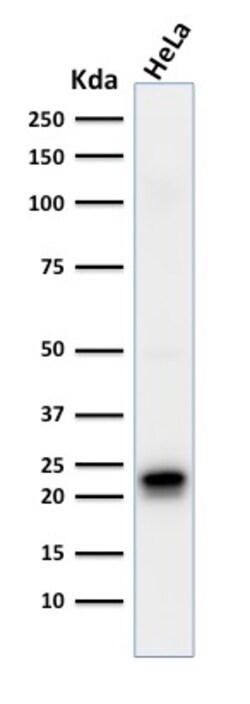
Biotium Ferritin, Heavy Chain (FTH) (Microglia Marker)(FTH/2081), 0.2mg/mL
Mammalian ferritins consist of 24 subunits made up of 2 types of poly-peptide chains, ferritin heavy chain and ferritin light chain, which each have unique functions. Ferritin heavy chains catalyze the first step in iron storage, the oxidationof FeI(II), whereas ferritin light chains promote the nucleation of ferrihydrite, enabling storage of Fe(III). The most prominent role of mammalian ferritins is to provide iron-buffering capacity to cells. In addition to iron buffering, heavy chain ferritin is also involved in the regulation of thymidine biosynthesis via increased expression of cytoplasmic serine hydroxymethyltransferase, which is a limiting factor in thymidylate synthesis in MCF-7 cells. Light chain ferritin is involved in cataracts by at least two mechanisms: hereditary hyperferritinemia cataract syndrome, in which light chain ferritin is overexpressed; and oxidative stress, an important factor in the development of aging-related cataracts. Primary antibodies are available
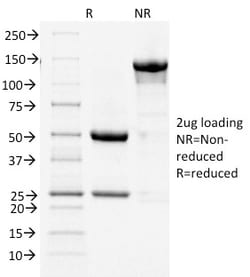
Biotium Cycloxygenase-2 (COX-2)(COX2/1941), 1mg/mL
Prostaglandins are a diverse group of autocrine and paracrine hormones that mediate many cellular and physiologic processes. Prostaglandin H2 (PGH2) is an intermediate molecule in formation of the prostaglandins. Cyclooxygenase-1 (Cox-1) and cyclooxygenase-2 (Cox-2) are prostaglandin synthases that catalyze the formation of PGH2 from arachidonic acid (AA). Cox-1 and Cox-2 are isozymes of prostaglandin-endoperoxidase synthase (PTGS). Cox-1 is constitutively expressed in most tissues and is thought to serve in general housekeeping functions. Cox-2 is efficiently induced in migratory cells responding to pro-inflammatory stimuli and is considered to be an important mediator of inflammation. Both enzymes are targets for the nonsteroidal therapeutic anti-inflammatory drugs, NSAIDs. COX2 expression is significantly increased in 85-90% of human colorectal adenocarcinomas whereas levels of COX-1 are not changed. Primary antibodies are available purified, or with a selection of fluorescent
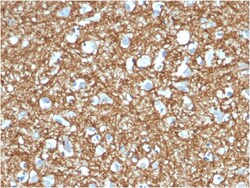
Biotium p14ARF(4C6/4), 0.2mg/mL
The progression of cells through the cell cycle is regulated by a family of proteins designated cyclin-dependent kinases (Cdks). Sequential activation of individual members of this family and their consequent phosphorylation of critical substrates promotes orderly progression through the cell cycle. Multiple proteins are encoded by the tumor suppressor gene CDKN2A (MTS1/ p16INK4a) via translation of alternate reading frames, resulting in the pro- duction of the p19 ARF protein in mice and the p14 ARF protein in humans. p14 ARF induces an increase in MDM2 and p21 levels and leads to cell cycle arrest in both G1 and G2/M. p14 ARF is negatively regulated by p53 and is known to bind directly to MDM2. CDKN2A also encodes the mitotic protein p16, which binds to and inhibits the Cdk4/cyclin D complex. Primary antibodies are available purified, or with a selection of fluorescent CF Dyes and other labels. CF Dyes offer exceptional brightness and photostability. Note: Conjugates of blue
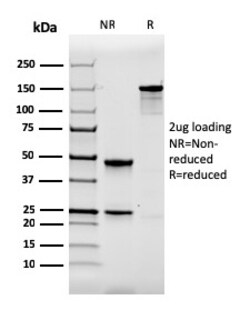
Biotium Calbindin 1 (CALB1)(CALB1/2364), 1mg/mL
Calbindin 1, also known as calbindin D28K, is a member of a family of calcium binding proteins. This protein family also includes calmodulin, calbindin 2, S-100, and troponin C. Calbindin 1 is a 261-amino acid protein with 6 EF-hand domains, 4 of which are active calcium-binding domains. Expressed in brain, ovary, uterus, testis, pancreas, liver, kidney and intestine, calbindin 1 acts as a calcium-buffering agent and alters the activity of the plasma membrane ATPase. In neuronal cells, calbindin 1 modulates calcium channel activity, calcium transients and intrinsic neuronal firing activity. Also, calbindin 1 has been implicated to play a role in apoptosis and microtubule function. Primary antibodies are available purified, or with a selection of fluorescent CF Dyes and other labels. CF Dyes offer exceptional brightness and photostability. Note: Conjugates of blue fluorescent dyes like CF405S and CF405M are not recommended for detecting low abundance targets, because blue dyes
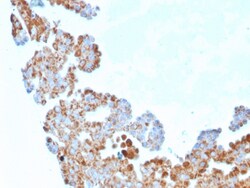
Biotium Cell Division Cycle 34 homolog(CPTC-CDC34-2), 0.2mg/mL
Cell cycle events are regulated by the sequential activation and deactivation of cyclin dependent kinases (Cdks) and by the proteolysis of cyclins. The cell division cycle (Cdc) genes are required at various points in the cell cycle. Cdc25A, Cdc25B and Cdc25C protein tyrosine phosphatases function as mitotic activators by dephosphorylating Cdc2 p34 on regulatory tyrosine residues. Cdc6 is the human homolog of Saccharomyces cerevisiae Cdc6, which is involved in the initiation of DNA replication. Cdc37 appears to facilitate Cdk4/cyclin D1 complex formation and has been shown to form a stable complex with HSP 90. Cdc34, Cdc27 and Cdc16 function as ubiquitinconjugating enzymes. Cdc34 is thought to be the structural and functional homolog of Saccharomyces cerevisiae Cdc34, which is essential for the G1 to S phase transition. Cdc16 and Cdc27 are components of the APC (anaphase promoting complex) which ubiquitinates cyclin B, resulting in cyclin B/Cdk complex degradation. Primary antibod

Biotium Desmoglein-3 (Squamous Cell Marker) (DSG3/1535), 0.2mg/mL
This antibody recognizes a protein of 130 kDa, identified as Desmoglein-3 (DSG3). This MAb is highly specific to Desmoglein-3 and does not cross-react with other members of the Desmoglein-family. DSG3 is a calcium-binding transmembrane glycoprotein component of desmosomes in vertebrate epithelial cells. Research has shown that DSG3 has a very high sensitivity (>80%) and specificity (100%) in recognizing squamous cell carcinoma (SqCC). Therefore, DSG3 is considered a very important marker for lung SqCC and can be a useful ancillary marker to separate SqCC from other subtypes of lung cancer. Moreover, studies have shown that DSG3 expression in lung SqCC may indicate a poor prognosis.Primary antibodies are available purified, or with a selection of fluorescent CF Dyes and other labels. CF Dyes offer exceptional brightness and photostability. Note: Conjugates of blue fluorescent dyes like CF405S and CF405M are not recommended for detecting low abundance targets, because blue

Biotium Connexin 32 (Gap Junction Protein) (R5.21C), CF488A conjugate, 0.1mg/mL
This antibody recognizes a protein of 27-32 kDa, identified as Connexin 32. The connexin family of proteins forms hexameric complexes called connexons that facilitate movement of low molecular weight proteins between cells via gap junctions. Connexin proteins share a common topology of four transmembrane alphalpha-helicaldomains, two extracellular loops, a cytoplasmic loop and cytoplasmic N- and C-termini. Many of the key functional differences arise from specific amino-acid substitutions in the most highly conserved domains, the transmembrane and extracellular regions. Each of the approximately 20-connexin isoforms produces channels with distinct permeability and electrical and chemical sensitivities; therefore, one connexin usually cannot fully substitute for another.Primary antibodies are available purified, or with a selection of fluorescent CF Dyes and other labels. CF Dyes offer exceptional brightness and photostability. Note: Conjugates of blue fluorescent dyes like
Biotium Spectrin beta III (SPTBN2) (SPTBN2/1584), CF568 conjugate, 0.1mg/mL
Spectrin is an actin binding protein that is a major component of the plasma membrane skeleton. Spectrins function as membrane organizers and stabilizers by forming dimers, tetramers and higher polymers. Vertebrate spectrins have two alpha-subunits (alpha-I/alpha-II), four beta-subunits (beta-I-beta-IV) and a beta-H subunit creating diversity and specialization of function. Spectrin alpha and spectrin beta are present in erythrocytes, whereas spectrin alpha II (also designated fodrin alpha) and spectrin beta I (also designated fodrin beta) are present in other somatic cells. The spectrin tetramers in erythrocytes act as barriers to lateral diffusion, but spectrin dimers seem to lack this function. Spectrin beta III is highly homologous to both spectrin beta I and spectrin beta II. Spectrin beta III is highly expressed in brain, kidney, pancreas and liver, and at lower levels in lung and placenta. Spectrin beta 3 is primarily expressed in nervous tissues with highest expressio

Biotium ATRX / RAD54 (Alpha Thalassemia Mental Retardation) (39f), 0.2mg/mL
ATRX is a member of the Snf2 family of helicase/ATPases, which contribute to the remodeling of the nucelosome structure in an ATP-dependent manner, and facilitate the initiation of transcription and replication. Structurally, ATRX contains a PHD zinc finger motif. ATRX is regulated throughout the cell cycle where it is differentially distributed within the nucleus. During interphase, ATRX predominately associates with the nuclear matrix, while during mitosis, ATRX localizes with condensed chromatin. At the onset of M phase, phosphorylation rapidly induces this redistribution of ATRX to the short arms of human acrocentric chromosomes, where it then specifically complexes with heterochromatin protein 1 to mediate chromosomal segregation. Mutations in the ATRX gene correlate with a high incidence of severe X-linked form of syndromal mental retardation associated with alpha-thalassemia or ATRX syndrome. Primary antibodies are available purified, or with a selection of fluorescent

Biotium CD44v9 (Marker of Tumor Metastasis) (CD44v9/1459), CF488A conjugate, 0.1mg/mL
This antibody recognizes an epitope encoded by exon v9 on the variant portion of human CD44. The CD44 molecule belongs to a family of cellular adhesion molecules found on a wide range of normal and malignant cells in epithelial, mesothelial and hemopoiesis tissues. CD44 is a single gene with 20 exons, of which 10 are normally expressed to encode the basic CD44 (H-CAM) molecule. The additional 10 exons (v1 to v10) are only expressed by alternative splicing of the nuclear RNA. The expression of specific cell adhesion molecule CD44 splice variants has been reported to be associated with metastasis in certain human malignancies.Primary antibodies are available purified, or with a selection of fluorescent CF Dyes and other labels. CF Dyes offer exceptional brightness and photostability. Note: Conjugates of blue fluorescent dyes like CF405S and CF405M are not recommended for detecting low abundance targets, because blue dyes have lower fluorescence and can give higher non-spec
Biotium Adipophilin / Perilipin-2 (Marker of Obesity) (ADFP/1493), 0.2mg/mL
Perilipin-2, also known as Adipophilin, belongs to the perilipin family, members of which coat intracellular lipid storage droplets. This 48 kDa protein is associated with the lipid globule surface membrane material, and maybe involved in development and maintenance of adipose tissue. However, it is not restricted to adipocytes as previously thought, but is found in a wide range of cultured cell lines, including fibroblasts, endothelial and epithelial cells, and tissues, such as lactating mammary gland, adrenal cortex, Sertoli and Leydig cells, and hepatocytes in alcoholic liver cirrhosis, suggesting that it may serve as a marker of lipid accumulation in diverse cell types and diseases.Primary antibodies are available purified, or with a selection of fluorescent CF Dyes and other labels. CF Dyes offer exceptional brightness and photostability. Note: Conjugates of blue fluorescent dyes like CF405S and CF405M are not recommended for detecting low abundance targets, because
Biotium Human IgG4 (Ig Heavy Constant Gamma 4) (G4m Marker) (IGHG4/1345), CF740 conjugate, 0.1mg/mL
The regions of relatively constant sequence beyond the variable regions of immunoglobulins are termed constant regions (C regions) and are present in both the heavy and light chains. With very few exceptions, the sites of attachment for carbohydrates on immunoglobulins are located in these C regions. These regions also function to hold the variable regions together by using the disulfide bond between them. The C regions facilitate interaction with the antigen by increasing the maximum rotation of the immunoglobulin arms. Reportedly, a large population of patients with recurrent respiratory tract infection has low IgG4 concentrations. IgG4-related sclerosing disease has been recognized as a systemic disease entity characterized by an elevated serum IgG4 level, sclerosing fibrosis, and diffuse lymphoplasmacytic infiltration with the presence of many IgG4-positive plasma cells. IgG4 is overexpressed in inflammatory pseudotumor (IPT) and under expressed in inflammatory myofibrobl